

 Italiano
Blog, Places to visit, Unusual itineraries
WHAT TO SEE IN VENICE? HERE IS OUR GUIDE WITH UNUSUAL ITINERARIES

Dec
What to see in Venice? The complete guide with our advice for visiting Venice and its surroundings following unusual itineraries.
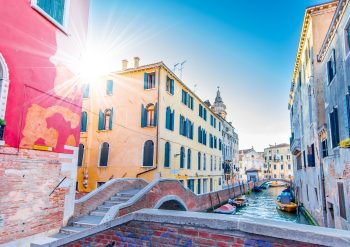
Walking through Venice streets is certainly an experience to have at least once in a lifetime. Every corner not only reserves artistic or architectural beauty but tells a story and immerses us in the sumptuous past of the lagoon city.
In this guide we have collected our advice for experiencing an authentic Venice and fully understanding the spirit of the city. Here are the places we have selected for you. Ready to discover them with us?
In this article:
- On the trail of the most famous Venetian characters
- The sumptuous palaces of Venice and their stories
- The places of Venetian devotion
- The most particular bridges in Venice
- Scuole Grandi and Piccole of devotion, arts and crafts
- Other places not to be missed in Venice
- The islands of the lagoon
THREE PLACES TO EXPERIENCE AN AUTHENTIC VENICE
In addition to the more classic and well-known destinations such as Piazza San Marco with the Basilica of the same name, Doge’s Palace, and Rialto Bridge, below we have listed some places that will immerse you in the most authentic Venice, making you discover other fascinating facets of this city.
However, even the most famous places hold surprises if visited with a careful eye.
In fact, if you observe the façade of Doge’s Palace towards the Piazzetta, two red columns stand out in the whiteness of the loggia. According to some sources, the two red columns were the place from which the Doge witnessed the capital executions, while others maintain that the executions took place between these two columns. The chronicles of the time, for example, testify that on 5th March 1412 Francesco Baldovino was hanged here for having been found guilty of plotting against the Republic.
Another curiosity is linked to a statue located near Rialto Bridge. In Campo di San Giacomo di Rialto, in front of the church, there is the statue of the Hunchback of Rialto. It depicts a bent man holding the ladder on his shoulders to reach the “Bando stone”: a column from which the proclamations were read out loud, with which laws and sentences were made public.
At the same time, to acquire legal validity, the announcements and laws of the State were also read from the announcement stone, a porphyry column located in San Marco Square. These places take us into the harshest reality of the lagoon city’s past, that of criminal Venice.


ON THE TRAILS OF THE MOST FAMOUS VENETIAN CHARACTERS
An unusual and fun way to visit Venice is certainly to follow the traces of famous people who lived in the lagoon city through the streets and squares. Among these certainly worth mentioning is the greatest traveler of all time, Marco Polo, but also the most famous Don Juan in history, Casanova, and artists such as Tintoretto.
MARCO POLO AND VENICE, HOMETOWN OF GREAT TRAVELERS
Entering the narrow streets of Cannaregio district, near the church of S. Giovanni Crisostomo, you reach “Corte del Milion” and the house where Marco Polo lived. Nowadays the building houses Malibran Theater. During the restoration, several objects that belonged to the Polo family and other precious artifacts were found such as a rare purple glass, produced in Murano in 1300 BC. Another place that takes us back to the times of the great Venetian traveler is certainly Rialto market, where an entire area called “Erbarìa” represented the place from where herbs, spices and other products imported from the East and the rest of the world entered Venice by Marco Polo and other traders. In the past, in fact, Rialto was a flourishing of shops for the trade and processing of precious materials that came from far away, from the lagoon and from the mainland.
THE LIBERTINE VENICE OF GIACOMO CASANOVA
Following in the footsteps of Giacomo Casanova can be an excellent idea to retrace the places of perdition and the customs of the most transgressive and vicious period of the Serenissima, the eighteenth century. Casanova‘s is the Venice of gambling houses, of the erotic poet Giorgio Baffo, of Rio delle Carampane, of the masks. To begin we suggest a visit to his birthplace, in Calle Malipiero, where he was born on 2nd April 1725, to continue with the places of his childhood and those which were the scene of his adventures such as Ridotto di San Moisè, where he loved to challenge fate, Campo San Maurizio, where his great friend and poet Giorgio Baffo lived and Piombi, the famous prisons of Doge’s Palace, where Casanova was imprisoned on charges of magic, libertinism, freemasonry and contempt of institutions. Not to forget “Rio Terà de le carampane”, which was a real red light district. A way to get to know a very intimate Venice up close, as frivolous and vicious as it is intriguing, as carefree as it is dedicated to the most shady subterfuges.
THE VENICE OF GREAT ARTISTS LIKE TINTORETTO
Over the centuries, Venice has hosted great artists who are famous throughout the world and who have left thousands of magnificent works to remember their activity in the lagoon city. Among the painters the names of Canaletto, Tiziano, Veronese, Bellini, Tiepolo and Tintoretto stand out. Tintoretto, pseudonym of Jacopo Robusti, was born in Venice probably on 29 April 1519 (not all sources agree on the date of birth).

He represents one of the greatest exponents of Venetian painting and mannerist art. The nickname “Tintoretto” came from his father’s profession, dyer of silk fabrics. Even today it is possible to visit the places where the great painter lived starting from his home in Cannaregio district. On the facade of the building there is a small high relief of Hercules with a club. The origin of this depiction would be explained in a legend involving the daughter of the well-known artist, Marietta, and a witch. Another place linked to Tintoretto is Campo San Cassiàn, in San Polo district, where he apparently had a studio.
In fact, in a document from 1539 the artist signed himself “mistro Giacomo depentor nel champo di san Cahssan”. Finally, to continue this journey into art, we suggest visiting the places where his works can still be admired today such as Doge’s Palace, Madonna dell’Orto Church, Gallerie dell’Accademia and Scuola Grande di San Rocco.
Following in the footsteps of great artists such as Tintoretto who lived in Venice can prove to be an unusual but interesting way to visit the city.
THE LUXURIOUS PALACES OF VENICE AND THEIR STORIES
The sumptuous palaces of Venice, in addition to being true open-air artworks, often contain within their walls the stories of characters who have lived there. For this reason, going to discover these buildings could be a rather intriguing experience. There are so many noteworthy buildings, below you can find a selection.
CA’ REZZONICO
This palace was built by the will of Bon family, exponents of the ancient Venetian nobility. In the mid-seventeenth century they entrusted its execution to the illustrious Baldassarre Longhena. The building remained unfinished due to the death of the architect and the inability of the family to bear the huge costs of the construction site. In 1750 Giambattista Rezzonico, newly acquired nobility in 1687 through the outlay of money, bought the building and entrusted the completion work to Giorgio Massari. Today this palace houses the museum of eighteenth-century Venice.
PALAZZO CONTARINI E LA SCALA DEL BOVOLO

This palace, located near Campo Manin, experienced the vicissitudes of various owners who followed one another over five centuries of history. It is a “Fontego house” of evident late-Gothic taste. Towards the end of the fifteenth century the building was embellished with a bizarre spiral staircase (in Venetian “bovolo”, hence the name) at the behest of Pietro Contarini, scion belonging to the powerful Contarini family of the San Paternian branch which in the fourteenth century it had been able to boast the high honor of having given a doge, Andrea Contarini, to the Serenissima Republic.
CA’ DARIO
This marvelous Renaissance palace, decorated with polychrome marble, directly overlooks the Grand Canal, in Dorsoduro district. However, this building is famous for a sad legend. In fact, it is said to bring bad luck to its owners, all of whom died in mysterious circumstances or violent deaths.
PALAZZO GRIMANI
This elegant sixteenth-century palace overlooking the Grand Canal once hosted sumptuous celebrations such as that of the Coronation of Dogaressa Morosina Morosini. A legend would explain the presence of the large arches with an episode concerning a young Grimani, who some identify with Gerolamo himself. In fact, having the intention of marrying a young woman from the Tiepolo family, he asked for her hand and received this response from her father: “It will never be true that I would give my daughter’s hand to a man who doesn’t have a palace in Canal”. Whereupon the young Grimani promised that he would build a house with windows larger than the door of Ca’ Tiepolo, and so it happened. Today this building is the seat of the Court of Appeal.
CA’ D’ORO
It is an ancient noble residence from the 15th century. Nowadays it is a museum but in the past it was a private home full of shining blue, white, black and above all gold decorations, so much so that it was called the Golden House.
The origins of this building are very curious. In 1412, Marino Contarini, a public prosecutor, decided to build the most beautiful house in Venice. He purchased a portion of land on the Grand Canal and hired the best stonecutters of the time. He probably designed the palace himself and the result was exceptional. Today the decorations that gave it its name are no longer seen but it still remains a wonderful example of flowery Gothic, the most popular style of the time in Venice. Currently Ca’ d’Oro houses a precious art collection belonging to Baron Giorgio Franchetti.

CA’ VENDRAMIN CALERGI
This palace built between the end of the fifteenth century and the beginning of the sixteenth century is now the winter headquarters of the Municipal Casino. The figure of the great German composer Richard Wagner (1813 – 1883) is linked to this palace. Here, in fact, the artist spent the last months of his life.
CA’ CORNER DELLA REGINA
The name of this building is linked to its former owners, the Cornaros and the Queen of Cyprus, Caterina, who was born in 1454 in the place where the palace was built three centuries later. Catherine became queen of Cyprus when she married James III Lusignan, but upon her husband’s death she was forced to cede her possessions to Venice while in exchange she received the lordship of Asolo. Today this building houses the Historical Archive of the Biennale.
CA’ FOSCARI
This fifteenth-century building currently houses the headquarters of the university of the same name. It is a wonderful example of architecture in the Floral Gothic style, embellished with loggias and pointed quadrilobed arches. In the past it was the home of a very important Venetian family and here, in 1574, Henry III of France was hosted. The lordship, in fact, asked the families who owned the richest and most luxurious buildings to host important people during their stays in the city.
PLACES OF VENETIAN DEVOTION
In Venice there are places where spirituality and art meet and give life to a synthesis that appears almost miraculous. So why not go and discover the places of Venetian devotion, places where beauty becomes nourishment for the spirit?
BASILICA DI SANTA MARIA GLORIOSA DEI FRARI
The construction of this church began around 1340. It is in Gothic style, with windows ending in a pointed arch, decorated with four-petalled flowers. At the beginning of the fifteenth century the building was rebuilt as it appears today. “Frari”, from which the name derives, were the Franciscan friars who arrived in Venice in 1222, following Saint Francis. The bell tower of the church (70 metres) is the highest in the entire lagoon city after that of San Marco. Inside it houses works by great artists such as Tiziano, Giovanni Bellini, Paolo Veneziano, Antonio Canova and many others.
BASILICA DI SANTA MARIA DELLA SALUTE

The origin of this religious building is linked to the plague epidemic that devastated the city in 1630. Thus it was that Doge Nicolò Contarini made a solemn vow to Madonna: if the plague had been defeated, he would have a beautiful church dedicated to her built. Shortly thereafter the epidemic ended. It was decided that the church should be built in one of the most beautiful places in the city, in front of San Marco basin. On 1st April 1631 the Doge laid the first stone and the building was built based on a design by the great architect Baldassare Longhena. A curiosity: more than a million piles were used to build the foundations!
BASILICA DEI SANTI GIOVANNI E PAOLO
It is the largest religious building in the city. Its origin is linked to a legend. It is said that once only a small church stood in the field of the same name. One night almost eight hundred years ago, the small church surrounded by flowers, doves and angels appeared to Doge Jacopo Tiepolo in a dream, while a voice told him that this was the place chosen for the preachers of God. Thus it was that between the thirteenth and fourteenth centuries the Doge had the great basilica built that we see today.
CHIESA DI SANTA MARIA FORMOSA
This church, located in Castello district, overlooks the campo of the same name. Its origin is also linked to an event that according to tradition took place in the 7th century. It is said that one day the Madonna appeared to the bishop San Magno in a dream, ordering him to build a church in the place where she had seen a small white cloud stop and the bishop obeyed. The adjective “formosa” would have remained to remember the appearance of Maria who appeared as a florid lady.
CHIESA DELLA MADONNA DELL’ORTO
This church of fourteenth-century origins was once dedicated to Saint Christopher who is still depicted today in the statue above the entrance portal. All the elements that embellish the brick facade are characteristic of the Venetian Gothic style: the two side windows with pointed arches, the double rows of small white columns that divide them, the flower-like decorations with three and four petals and the large rose window that stands out in the central nave. The religious building preserves Tintoretto’s artwork “Presentation of the Virgin in the Temple” (1551-1556) and other highly valuable masterpieces.
CHIESA DEL REDENTORE
This religious building was built starting in 1577 based on a design by Andrea Palladio (1508 – 1580). The term “Redeemer” is linked to an episode that occurred in the 16th century. In 1576 the population of Venice was decimated by a terrible plague epidemic and the city government decided to make a vow to Jesus: if the epidemic stopped, they would build a majestic church, dedicated to the Redeemer. That’s what happened. The location was chosen and the task was entrusted to the great architect. For the occasion, a huge procession was held, with the Doge, the Patriarch and all the most important characters and representatives of the Great schools. A pontoon bridge was also built from the small square of San Marco to Giudecca. Even today, the third Sunday of July is the feast of the Redeemer
THE MOST PARTICULAR BRIDGES OF VENICE
The bridges constitute the soul of this city. Just think that the historic center includes 121 islands connected by 436 bridges! An alternative way to visit Venice could be to find the most unique bridges and discover the stories and anecdotes that lie between one step and another. Some idea? One of the most famous is certainly the Bridge of Sighs, whose name derives from the sighs of the condemned who passed from the prisons to the court or the Accademia Bridge, built in 1854; until then, only Rialto Bridge allowed you to cross Grand Canal on foot.

Don’t miss the singular Ponte delle Guglie, the only one adorned with pinnacles placed at the base of the handrails, the spiers from which it takes its name. Once upon a time the bridges were all built of stone and without lateral protections. One of the last remaining examples is the Chiodo Bridge, without parapets, whose name derives from the noble Venetian family who once owned it. Also worth mentioning is Ponte delle Tette, located near one of the numerous brothels present in what was the red light district of the city. The prostitutes, looking out of the windows towards the bridge below, used to lure passers-by by showing them their exposed breasts.
Equally singular is Ponte dei Pugni, whose name derives from an ancient Venetian tradition, the war of the fists. From September to Christmas, the inhabitants belonging to two opposing factions, the Castellani and the Nicolotti, challenged each other with fists on the city’s bridges, then, as we saw earlier, almost all without railings on the sides. One characteristic is common to almost all of these bridges: the steps are wide. The reason? Because in the past even horses had to cross them!
SCUOLE GRANDI AND PICCOLE OF DEVOTION, ARTS AND CRAFTS
Another itinerary that allows you to visit Venice in an unusual way is certainly that of the Scuole which played an important role in the artistic, religious and social context of the Serenissima. The first were established in the Middle Ages, when particular brotherhoods of devotion, associations of cities and nations, guilds of arts and crafts, began to meet, under the protection of a Saint, not only for reasons of worship, but also for the defense of interests, for mutual assistance and for charity. They can be divided into two large categories: Scuole Grandi (of a devotional nature) and Scuole Piccole (almost always of Arts and Crafts). They spread from the second half of the 13th century until the end of the 16th century, when there were six Scuole Grandi including San Rocco, Santa Maria del Carmelo and San Teodoro.
OTHER PLACES NOT TO BE MISSED IN VENICE
There are so many places in Venice that are worth a visit. So here are some other interesting ideas.
THE STATE ARCHIVES
Established by the Austrian Government in 1815, with the name of the Venetian General Archive, it is located in the former convent complex of Santa Maria Gloriosa dei Frari. It houses 70 km of shelves full of documents covering the entire history of the Republic of Venice but also archives of religious and lay corporations.
THE ARSENAL
It constituted the heart of the Venetian naval industry starting from the 12th century. The term arsenal derives from the Arabic darsina’a, meaning “house of industry”. According to tradition, it was founded in 1104 and was expanded over the centuries to occupy a large part of the north-eastern area of the city. On the surrounding wall, to the right of the portal, a bust depicting Dante Alighieri recalls the poet’s visit to Venice in 1321.

GALLERIE DELL’ACCADEMIA
The Academy of Painters and Sculptors, founded in 1750, stood near San Marco but in 1807 it was moved to the complex consisting of the church and school of Santa Maria della Carità and the sixteenth-century convent of the Laterane Canons. Today it brings together the best collection of Venetian art, especially linked to paintings from the period from the 14th to the 18th century. Among the major artists represented are Tintoretto, Giambattista Pittoni, Tiziano, Canaletto, Giorgione, Giovanni Bellini, Vittore Carpaccio, Cima da Conegliano and Veronese.
STUCKY MILL
The imposing red brick building was owned by the Stuckys, industrialists of Swiss origin. In 1885 Giovanni Stucky called a German architect to design a large industrial complex on Giudecca island, where the family plants occupied a very large area of almost 200,000 cubic meters.
THE ISLANDS OF THE LAGOON
The best way to understand the essence of Venice and fully experience its daily life is to visit its islands. In addition to the best known ones such as Murano, island of glass, Burano, home of lace, known for its colorful houses, and the mysterious Torcello with its ancient cathedral, the other lagoon islands are also absolutely worth a visit, each with its own peculiarities. Here are some ideas.
SANT’ERASMO
This island has always had an agricultural vocation. This is why since the times of the Republic of Venice it has been called the “Garden of Venice”. It is famous for Sant’Erasmo violet artichokes and salt marsh honey, both products protected by Slow Food. From the mosaic of vegetable gardens, orchards and vineyards, Massimiliana Tower stands out imposingly, a fortress built by the Austrians between 1843 and 1844.
SAN FRANCESCO DEL DESERTO
This island is easily recognizable even from afar thanks to its profile characterized by the presence of numerous cypresses. The name of the island is linked to a legend. It is said that the saint of Assisi, returning from Syria on a Venetian ship, reached this island, founded a convent there and planted a stick that grew to become the pine that is still present today within the walls of the religious building.
SAN LAZZARO DEGLI ARMENI
San Lazzaro degli Armeni is a true oriental oasis within the lagoon. The island, once used as a leper colony, remained in a state of abandonment for two centuries, until, in 1717, the Venetian government granted Manung di Pietro (known as “Mechitar the Consoler”) to the Benedictine friar, who escaped from Armenia to due to the Turkish persecutions, the possibility of founding a monastic community there.
PELLESTRINA
A thin strip of land about 11 km long that separates the lagoon from the Adriatic Sea.

Pellestrina Island preserves one of the most intact dune environments in the entire upper Adriatic with an extraordinary wealth of fauna, the Ca’ Roman Oasis. Among the most characteristic elements of the island we find Murazzi, an imposing Istrian stone dam, built by the Republic of Venice to defend the banks of the lagoon from sea erosion. They replaced the previous palade, stilt houses filled with stones, which lasted very short.
If you would like to know more about the islands of the lagoon read our articles:
“What to see in Torcello”
“What to see in Burano”
“What to see in Murano”
“5 islands in Venice Lagoon that perhaps you don’t know”.
WHAT TO DO IN VENICE? HERE ARE THE EXPERIENCES NOT TO BE MISSED
We have seen what to see in Venice following unusual and alternative itineraries. But what to do to discover all the facets of the lagoon city? Here are the experiences not to be missed to live it like a local.
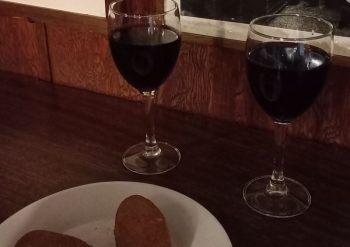
Certainly going for bacari is one of the activities that are part of the routine of every Venetian. Bacaro is a typical Venetian tavern, where you can taste the so-called ombre (glasses of wine) accompanied by cicchetti, delicious appetizers consisting of crostini, mozzarella in carrozza, meatballs and so on.
Another way to discover the culinary side of the city is to taste the typical desserts such as Bussolai, frittelle, galani and fugassa, in one of the various historic pastry shops. The pastry-making tradition in Venice has its roots in the 15th century when the Scuola degli Scaleteri was founded, a sort of arts and crafts guild that brought together pastry chefs.
If you want to discover the gastronomic aspects of the city and experience scenes of daily life, Rialto fish market is also worth a visit. A curiosity: during the times of Serenissima, to be able to sell fish at Rialto market certain requirements were necessary, i.e. being a native Venetian, Nicolotto or Povegiotto, being over 50 years old and having been a fisherman for at least 20 years.

The best way to immerse yourself in the artisan reality and discover the crafts of the past is certainly to visit the workshops, from that of Remèr, the craftsman who shapes the oars and forcole of the boats, to the world of the Venetian mask up to the glassworks of Murano. Another experience to do is a visit to a squero, a small shipyard where rowing boats are built, in particular gondola, which has now become the emblem of the city.
And why not look for an ancient volume among the columns of books in the unusual Acqua Alta Bookshop or attend one of the many shows held in the enchanting La Fenice or Goldoni theatres.
Another rather unusual but very interesting visit is to the San Michele Island, where Venice cemetery is located. For what reason? There are many illustrious people who rest here, including Franz Wickhoff, an art historian who died in 1909, the painter Emilio Vedova, the artist Armando Pizzinato and the Russian poet Josif Brodsky who dedicated the book «Fondamenta degli Incurabili» to Venice.
Finally, why not enjoy the wonderful views that the city offers? Admiring the breathtaking view of the Grand Canal from the terrace of the Fondaco dei Tedeschi or waiting for sunset from Zattere or Punta Dogana could prove to be a truly exciting experience.

THREE PLACES TO EXPERIENCE AN AUTHENTIC VENICE
Our advice doesn’t end here. Now we want to reveal our three places in the heart of Venice.
One of these is the picturesque Mazzorbo island, connected to Burano via Ponte Longo. It is characterized by the presence of various cultivated areas: “castraure di Mazzorbo” are very well known, i.e. the first fruit of the artichoke plant, while another important tradition of the island is that of wine. In fact, here inside the Tenuta Venissa the Dorona grape is grown, an indigenous Venetian grape recovered by Bisol family.
Another place absolutely worth visiting is the ghetto. The Jewish presence here is already attested before the year 1000, so much so that Venice is the oldest ghetto in Europe and the word originates from here, from the Venetian term “geto”.
Last but not least fascinating for its history and references to the East, Campo dei Mori and Palazzo dei Mastelli. The particularity of the field is linked to the origin of its name which derives from the three statues set in the walls. The statues represent three dark-skinned oriental men, the Moors. They appear to be the brothers Rioba, Sandi and Afani of the Mastelli del Cammello family who built the entire area. Their palace, Palazzo Mastelli, has a relief on the facade depicting a man with a turban pulling a camel, perhaps created to remember their oriental origins.


WHAT TO SEE NEAR VENICE? HERE ARE SOME IDEAS FOR ONE OR MORE DAY TRIPS
Venice is certainly one of the most enchanting cities in the world. However, this does not mean that its surroundings are any less. Any examples? Here are some places we recommend you visit around Venice.
THE NORTH LAGOON
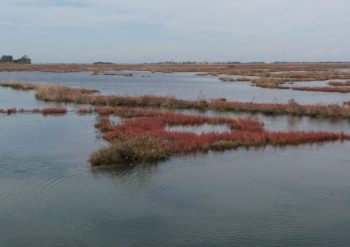
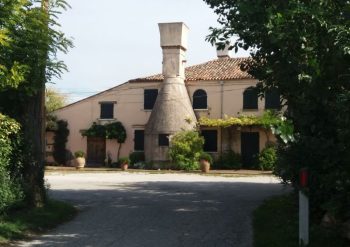
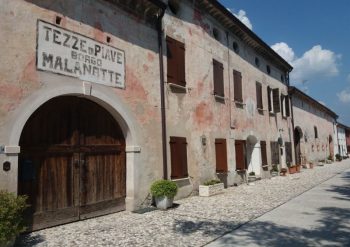
Remaining on the coast, there are many possibilities: one of the most beautiful corners of Venice Lagoon is the northern area starting from Lio Piccolo, a splendid rural village between bodies of water, sandbanks and cultivated fields, an area of great naturalistic and cultural interest. The same goes for Lio Maggiore and for Salsi area and the fishing valleys of the northern lagoon.



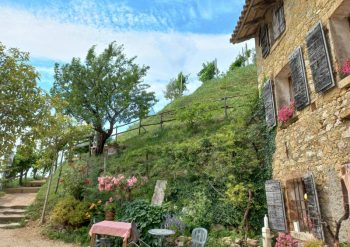
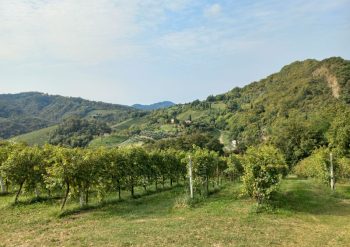
TREVISO AND PROSECCO HILLS
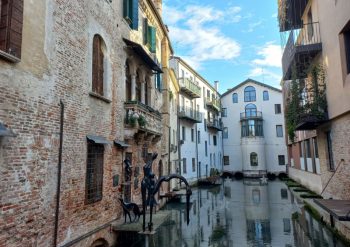
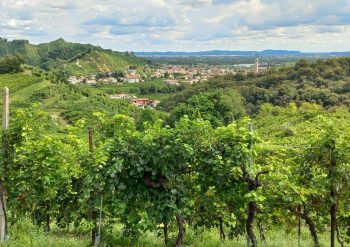
Treviso and Prosecco hills offer extraordinary views. Among the routes not to be missed is the Prosecco hills, to discover how man’s work has modulated the landscape over the centuries and given life to oenological excellence, a wine appreciated all over the world. And again the suggestive villages of Refrontolo with its Molinetto della Croda, Asolo or the enchanting village of Cison di Valmarino and the woods that surround it. If you want to know more, click here to read our article on Treviso>>




THE WONDERS OF NATURE
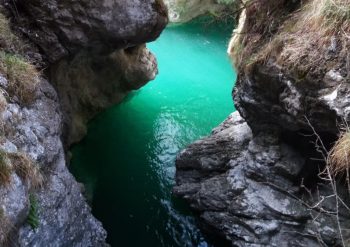
It is certainly worth visiting true masterpieces of nature such as the Brent dell’Art, extraordinary ravines dug by the tireless work of the waters of the Ardo torrent, Cadini Del Brenton, enormous potholes connected to each other by countless waterfalls and nestled water slides in the mysterious meanders of Mis Valley and the spectacular Caglieron Caves, a truly singular environment made up of a series of large potholes, waterfalls and caves that were formed over the centuries thanks to the work of nature and man.


DOLOMITES DAY TRIP FROM VENICE AND TREVISO: TOP AND HIDDEN GEMS
Cortina d'AmpezzoGuided tours

And have you ever visited one of these places? Which one are you most curious about?
If you want to discover the surroundings of Venice, you might also be interested in this article Best day trips from Venice
Always remember to bring sustainability in your suitcase, respect the environment and the community that hosts you!